
Your cart
There are no more items in your cart
What are the different types of training knives?
-
Categories:
Knives
When we talk about training knives, those uninitiated in the field tend to refer to butterfly knives. Certainly, butterfly training knives are the most popular. With their blade made of rubber or ABS plastic, they assist beginners in their learning of Kali arnis. But there are also fixed blade knife models that are specifically designed for training in combat, fencing, systema, Penchak or Silat. So, what are the different types of training knives? Let's break it down...
Aluminum training knives
Aluminum training knives are the preferred models for those who practice martial arts in a dojo. They are particularly used for training in the mastery of the art of Kail eskrima, Penchak and Baraw Sugbo. These types of models are characterized by an unsharpened blade, but one that has a fairly realistic appearance. This design allows the user's mind to remain more alert without the body being injured by contact with the blade. In any case, an aluminum training knife should always be accompanied by a set of protective equipment, including goggles and forearm guards.

Plastic training knives
The butterfly training knife falls into the large category of plastic blade knives. This configuration allows novices to better learn how to perform Tricks, impressive figures achieved by chaining the openings and closings of the knife. But even though these models feature a non-sharp blade, they have the same anatomy as a real butterfly knife.
You will also find models of plastic knives known as marker knives. They are equipped with a marking blade that was invented to go further in the practice of knife combat.

Wooden training knives
These models are characterized by their blade covered with dense foam. This design gives them greater safety in use while ensuring rigid contact. They are most often appreciated by enthusiasts of sparring and short blade fencing commonly called Toplar. The stick-knife features a similar design. The only difference lies in the fact that the blade is covered with less dense foam. This knife is thus intended to be a valuable ally for learning the different handling techniques of a combat knife.

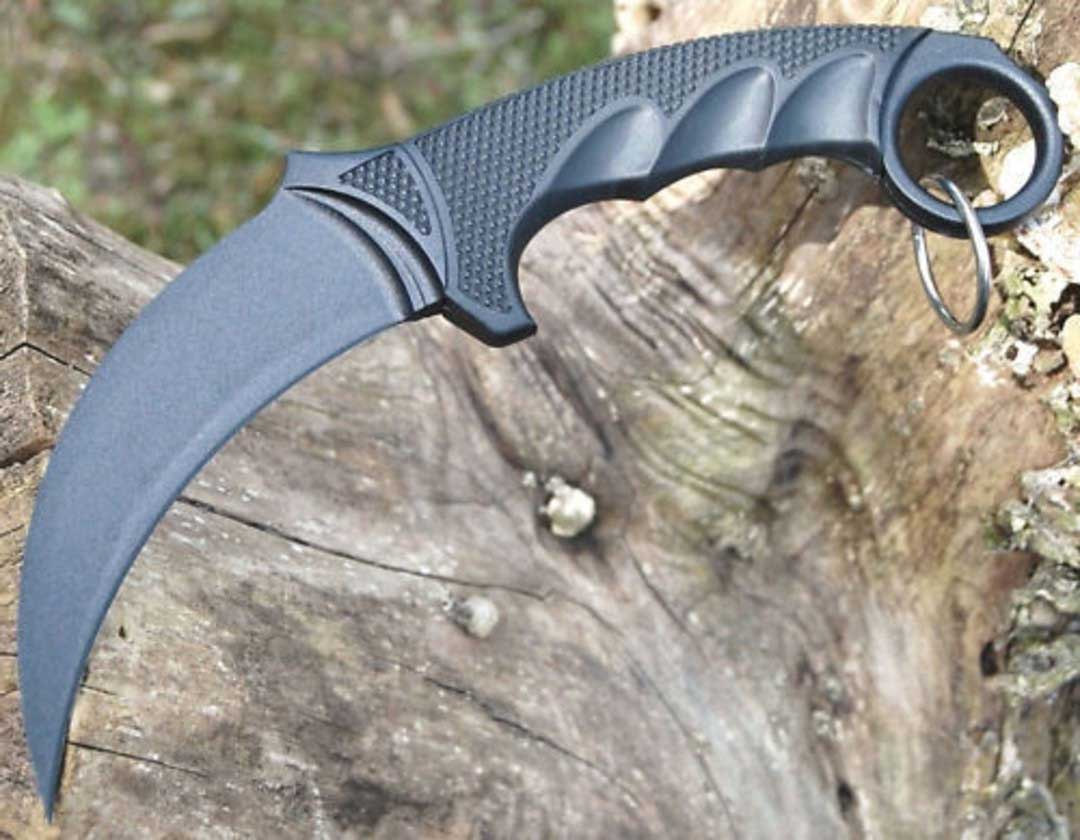
The aluminum Karambit
Those uninitiated in the field of cutlery sometimes have difficulty giving a true definition to the aluminum Karambit. However, it is a knife that was designed to allow beginners to learn biomechanical principles. This type of model, as a whole, features an aluminum structure. But the blade itself will be covered with foam to limit the pressure force exerted on the body during impact.
What is a training knife used for?
A training knife, as its name suggests, is an almost identical replica of a real knife. The difference is that this type of model is made from non-harmful material such as you have just seen above. And apart from plastic, wood, foam and aluminum, rubber and carbon fiber can also be used. In any case, whatever model is chosen, their "soft" design does not risk taking away the magic. The sensation provided by using a real combat knife or katana will be there.