
Your cart
There are no more items in your cart
Table cutlery: Forks and knives, how to navigate them?
-
Categories:
Knives
Knives, plates, glasses, forks, you quickly find yourself in high-end gourmet restaurants with elegant tables where all kinds of cutlery accumulate. But how do you make sense of it all? Which fork goes with which type of food? Which knives are used for bread, steak, or fish? Let's take a look.
Knives: for cutting
The field of cutlery is quite vast, composed of a wide variety of knives. And for each model, there is a dedicated use. In setting a table, among the most commonly used knives, you will find:
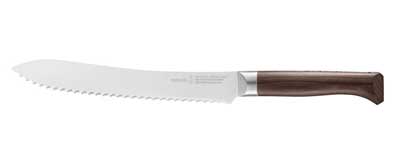
The bread knife
Bread is undeniably the staple food for most Europeans. At lunch, dinner, and even brunch, it's always present. This explains why we can't skip having a bread knife when setting the table.
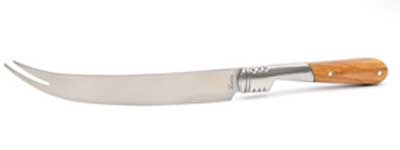
The cheese knife
Cheese is also an essential part of French gastronomy. Even the most basic dishes are often complemented by a combination of soft and hard cheeses. Hence the importance of setting the table with a set of cheese knives.
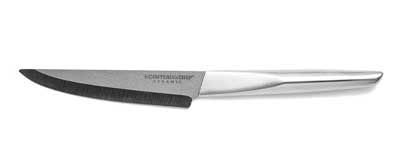
The steak knife
For every meal, the meat knife should be present. Its serrated and finely sharpened blade has been carefully designed to cut generous pieces of roast and fish fillet.
Forks: the importance of the number of tines
Like knives, forks also hold an important place among table cutlery. And contrary to what many imagine, there isn't just one type of fork. This utensil is part of a large family composed of various models.
The classic fork
The classic fork is the one most often found on all tables. It is characterized by 4 tines and due to its round shape, it has a design that resembles a spoon. Versatile par excellence, it is used for all types of meals ranging from the most classic to the most refined.

The two-tined fork
The most well-known fork in this two-tined category is none other than the escargot fork. With its small, meticulously designed size, it can easily enter an oyster shell to collect the meat. The fondue fork also belongs to this category. It is distinguished by its slender and long design.
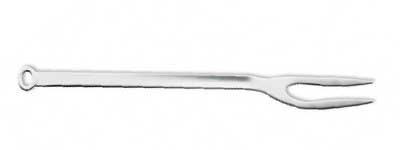
The three-tined fork
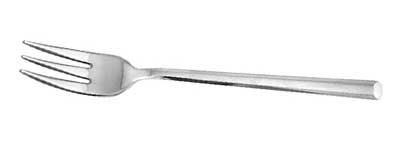
The three-tined fork is reserved for dessert. It's easily recognizable thanks to its two slightly sharp sides. These allow you to cut a cake without needing to use a knife. It's important to note that three-tined forks are also available in a wide variety of sizes and styles. While some have a thin and long design, others feature a more rounded and thick shape.
Now that you know more about knives and forks, there's no question of making a misstep when setting your table.